Lettuce Fertilizer 8-15-36 | Chelated Micronutrients | Hydroponics, Soil & Foliar Application
- Regular Price
- $ 24.99
- Sale Price
- $ 24.99
- Regular Price
- $ 24.99
Sold Out
- Unit Price
- per


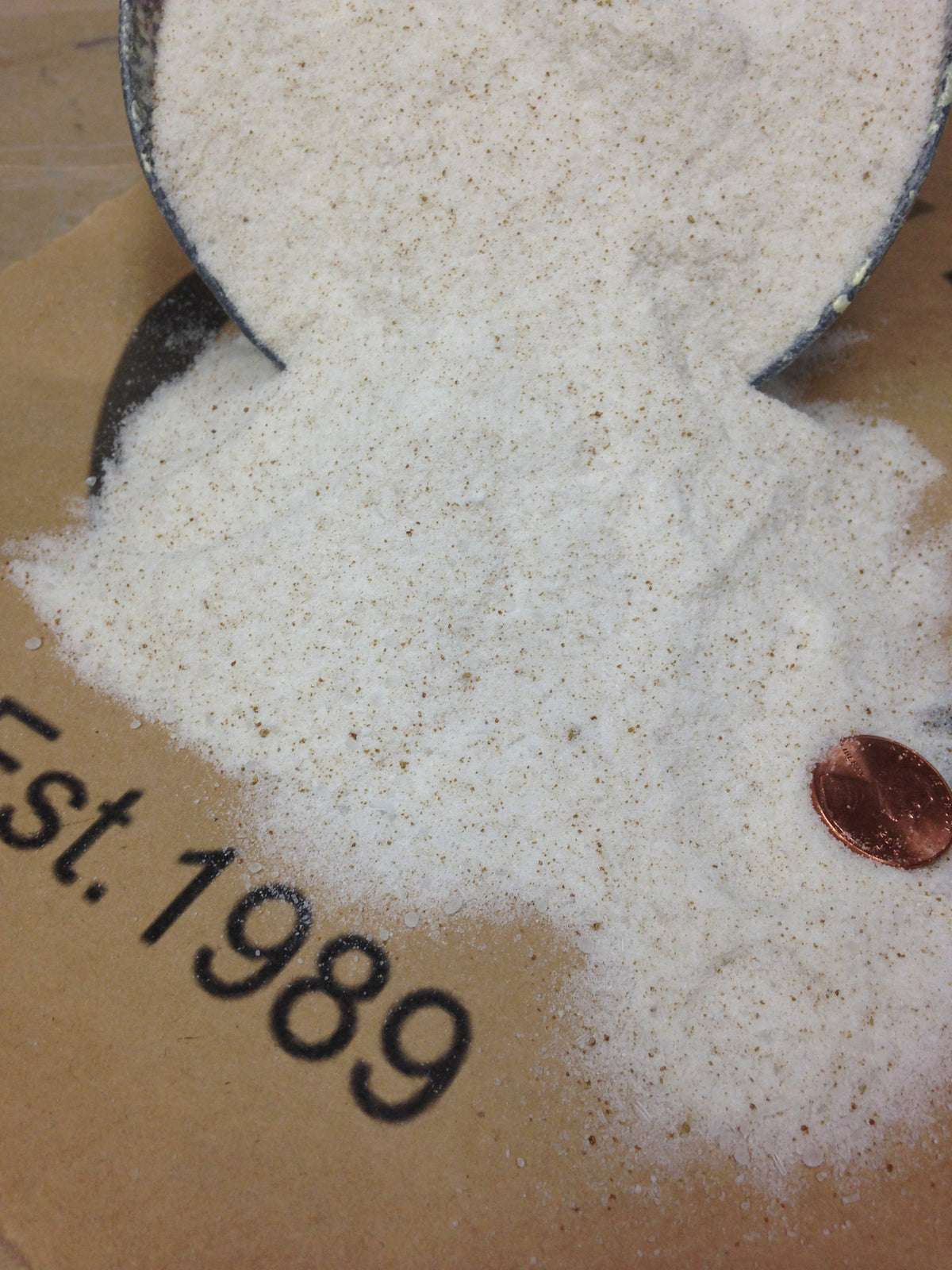


A premium water-soluble formula built specifically for lettuce, kale, spinach, chard, and all leafy crops. High potassium can significantly improve crisp texture and shelf life, while EDTA-chelated micronutrients support deep green color across soil, hydroponic, and foliar growing. CDFA registered and third-party lab tested.
Find your size → Calculate how much I need36%
Soluble potash (K₂O) for crisp texture & shelf life
8%
Moderate nitrogen — flavor over excess succulence
6chelated
Complete micronutrient package, EDTA where it counts
100%
Water soluble — drip, NFT, DWC, aero, foliar
Coverage estimates assume the standard hydroponic vegetative rate or a container liquid feed every 10 days. Actual usage varies with crop stage, plant density, and source-water EC.
Complete leafy-green program: 8-15-36 supplies NPK plus chelated micronutrients — it contains no calcium by design (calcium and phosphate precipitate together in concentrated solution). Pair it with a separate calcium source: Cal-Mag Plus or Calcium Nitrate. Calcium matters more for lettuce than almost any crop — tip burn is a calcium-transport failure. Never mix calcium and 8-15-36 as concentrated stock.
| Bag Size | Hydroponic Solution | Container Feeds | Best For |
|---|---|---|---|
| 1 lb | ~110 gal of solution | ~90 single-gallon feedings | A few plants, or a trial run |
| 2 lb | ~225 gal of solution | ~180 single-gallon feedings | Home growers, small NFT systems |
| 5 lb | ~560 gal of solution | ~450 single-gallon feedings | Most popular — serious home hydro |
| 10 lb | ~1,120 gal of solution | ~900 single-gallon feedings | Large systems and market gardens |
| 25 lb | ~2,800 gal of solution | ~2,250 single-gallon feedings | Best value — commercial greenhouses |
Engineered nutrient ratios for the entire leafy-green family — lettuce, brassicas, baby leaf, and microgreens included. Scale down for baby leaf and microgreen production.
Romaine, iceberg, butterhead, leaf, and baby mix — both soil and hydroponic production.
Baby and mature savoy types. The moderate nitrogen profile can help reduce excess oxalate accumulation.
Curly, lacinato, red Russian, and collard greens — soil and hydroponic.
Napa, green, red, and pak choi varieties. The high-K profile may support firm head formation.
Rocket, Swiss chard, and rainbow chard. Excellent for cut-and-come-again production.
Scale to quarter or half strength for fast-turnover crops. A single low-EC feeding usually suffices.
The 8-15-36 ratio is engineered for the unique nutritional demands of lettuce and leafy greens — where leaf quality, texture, and shelf life are the goals, not bulk vegetative mass.
Soluble potash (K₂O) can help strengthen cell walls for the crunch consumers expect, and may support extended post-harvest shelf life. Learn more in What's the Function of Potassium in Plants?
Excess nitrogen creates overly succulent tissue with reduced shelf life, bitter flavors, and elevated nitrate accumulation. 8% provides enough N for healthy chlorophyll and leaf development — without the downsides. See What's the Function of Nitrogen in Plants?
All six essential micronutrients in precise ratios. Iron, manganese, zinc, and copper are EDTA-chelated to stay available at higher pH; boron and molybdenum are supplied in highly available mineral forms. See Sulfate vs. Chelated Fertilizers.
Dissolves readily in cold water with zero residue. Compatible with drip lines, NFT channels, DWC, aeroponics, and fine-mist foliar sprayers when fully dissolved and used at recommended concentrations. See What Are the Best Fertilizers for Hydroponics?
Registered with the California Department of Food and Agriculture. Each batch is tested for heavy metals by an independent lab — results consistently well below required limits. Documents available below.
36% K₂O
Soluble potash from MKP, potassium sulfate & potassium nitrate
Leafy greens are largely water — and potassium is the nutrient that controls water pressure inside plant cells (turgor pressure). The 36% K₂O level in this formula reflects the heavy potassium demand of crops where the leaf itself is the product. Potassium regulates stomatal function and water-use efficiency, activates dozens of enzyme systems, and can help strengthen cell walls for the crisp texture buyers expect.
The nitrogen is supplied as 7.5% nitrate and 0.5% ammoniacal. The predominantly nitrate form is directly available for rapid uptake; the small ammoniacal fraction helps moderate root-zone pH in higher-alkalinity water. The available phosphate (P₂O₅) at 15% develops strong root systems for maximum nutrient uptake, supports ATP production for cellular energy, and promotes faster establishment.
Iron, manganese, zinc, and copper are EDTA-chelated so they remain soluble across a wide pH range — particularly important in alkaline irrigation water or high-pH growing media, where unchelated mineral forms can precipitate before reaching plant roots. Boron and molybdenum don't form the same insoluble compounds and are supplied in highly available mineral forms.
For deeper coverage, see What's the Function of Potassium in Plants? and What's the Function of Phosphorus in Plants?
Rates for lettuce, kale, spinach, chard, and all leafy crops. Select the tab for your growing method — soil & container, hydroponic reservoirs, or foliar spraying.
🪴 Quick start (containers): Mix into 1 gallon of water per plant — 1 g (a scant ¼ tsp) while young, 3 g (a generous ½ tsp) in active growth, 5 g (1 tsp) for a mature head. Feed every 10 days, and water in with plain water right after. Add your calcium source separately.
Quick answer: Containers are fed per plant. In-ground beds are fed per area (per 100 sq ft), so plant count doesn't change the amount. Supplement calcium separately either way.
How to read this — worked examples:
Containers (per plant). 12 plants in active growth: 12 × 3 g = 36 g of 8-15-36 total, dissolved in 12 × 1 gal = 12 gallons of water, every 10 days. Water in with plain water right after.
In the ground (per area, not per plant). A 100 sq ft bed of cut-and-come-again greens: 0.25 lb (~113 g) per 100 sq ft, side-dressed (sprinkled around the plant, not touching the stem), every 2 weeks. Because this is set by area, 12 plants or 30 plants in that same 100 sq ft get the same 0.25 lb — just split it evenly and water in.
| Stage | 8-15-36 (per plant) | Water (per plant) | How Often |
|---|---|---|---|
| At potting | ½ tsp per gallon of potting mix, mixed in | — | At potting; top-dress at 3 weeks |
| Seedling / young | 1 g (scant ¼ tsp) | 1 gal | Every 10 days |
| Active growth | 3 g (generous ½ tsp) | 1 gal | Every 10 days |
| Mature / large head | 5 g (1 tsp) | 1 gal | Every 10 days; reduce 2 weeks before harvest |
Container feeding: Container amounts are per plant — multiply by your plant count. One gallon of water per plant at every stage; only the fertilizer amount steps up. Apply to already-moist media and water in with plain water right after. Pair with Cal-Mag Plus at about 5 ml per plant between feedings to help limit tip burn. Flush containers with plain water once monthly to reset salt levels.
| Application | Rate (per 100 sq ft) | Timing |
|---|---|---|
| Pre-plant incorporation | 1 lb + 2" compost | Once, before transplant or direct seeding |
| Side-dress — cut-and-come-again | 0.25 lb (~113 g) | Every 2 weeks during active growth |
| Side-dress — head lettuce | 0.25 lb (~113 g) | Single application at heading; reduce 2 weeks before harvest |
| Drip fertigation | 0.5 lb / 100 gal of irrigation water | Weekly during active growth |
📋 Soil test first: Rates above are general guidelines based on typical soil-test levels and crop removal estimates. Confirm against a current soil test and your local cooperative extension — needs vary significantly by soil type, variety, and region. Field-scale lettuce programs typically run 250–650 lb/acre/season depending on soil test; the calculator below includes a Commercial tab with the per-acre nutrient payload.
Sources: University of California Agriculture & Natural Resources (UC ANR) lettuce production guidelines; UMass Amherst Extension vegetable production guide; Cornell CEA Lettuce Handbook.
Quick answer: Everything is per plant. Multiply each column by your plant count, mix into the reservoir, then top up water until it reads the target EC. Never exceed 2.0 EC.
Every amount below is per plant — multiply the whole row by your plant count. The water column is roughly how much your reservoir holds per plant at standard NFT/raft density; top up to hit the EC target, since water volume only sets concentration, not the nutrient a plant needs. The EC column is the final measured value after all nutrients are mixed. Cal-Mag Plus values are ml of prepared stock (the entire 5 lb bag dissolved in 2 gallons of water) — shake before each use.
| Growth Stage | 8-15-36 (per plant) | Cal-Mag Plus (per plant) | Calcium Nitrate (per plant, RO/soft) | Water per Plant | Final EC | pH |
|---|---|---|---|---|---|---|
| Seedling / Transplant | 0.8 g | 3 ml | — | 0.8–0.9 gal | 0.8–1.0 EC | 5.8–6.2 |
| Vegetative | 1.5 g | 6 ml | 0.6–1 g (optional) | 0.8–0.9 gal | 1.2–1.6 EC | 5.6–6.0 |
| Mature / Harvest | 1.7 g | 8 ml | 1–1.7 g (head fill) | 0.8–0.9 gal | 1.4–1.8 EC max | 5.5–6.0 |
How to read this — worked example: 60 plants in vegetative growth, on RO water:
Tip burn & plant density: Tip burn is a calcium-transport issue triggered by rapid growth at high EC, low humidity, and poor air movement — not a deficiency foliar feeding can fix. Prevention: keep EC under 1.8 during head fill, maintain root-zone calcium, ensure canopy air movement, and avoid leaf temperatures above 75°F during head fill.
Mixing sequence: Fill to full water volume → dissolve Calcium Nitrate fully (RO/soft water) → add Cal-Mag Plus → add 8-15-36 last → adjust pH and verify final EC. Never combine concentrated calcium products directly with concentrated phosphate or sulfate fertilizers.
Hard tap water: water above roughly 30 ppm calcium already carries part of what Cal-Mag supplies — start low and add only what a water test shows you need. Above 80 ppm Ca, Cal-Mag may not be needed at seedling and vegetative stages at all.
Sources: Resh, "Hydroponic Food Production" (CRC Press, 7th ed.); Cornell CEA Lettuce Handbook; UMass Amherst Center for Agriculture, Food & Environment greenhouse lettuce guidance.
Quick answer: ~2.3 g of 8-15-36 per gallon of finished spray (~½ tsp/gal) for supplemental Ca/Mg support during head fill. Foliar is mixed per gallon of spray, not per plant — lettuce is small and dense, so one gallon covers roughly 80 plants.
| Purpose | 8-15-36 (per gallon) | Cal-Mag Stock | Frequency / Notes |
|---|---|---|---|
| Supplemental Ca/Mg support | ~2.3 g (~½ tsp) | 10 ml/gal in tank | Weekly during head fill — supplemental only, not a tip-burn cure |
| Maintenance / general | ~1.7 g (~⅓ tsp) | 5 ml/gal in tank | Every 10 days; light spray to glistening, not runoff |
| Deficiency correction (MAX) | ~3.4 g (~¾ tsp) | — | Every 5–7 days, max 2 sprays — then address root-zone nutrition |
How to read this — worked example: 2 gallons of supplemental spray: 2 × 2.3 g = 4.6 g of 8-15-36 plus 2 × 10 ml = 20 ml Cal-Mag stock. That covers roughly 160 lettuce plants sprayed to glistening. Repeat weekly during head fill, and stop 7 days before harvest.
Foliar safety check: Foliar rates are well below root-feed rates — never exceed 3.4 g per gallon for lettuce. Teaspoon equivalents are approximate (~5 g/tsp) — weigh for precision. Do not spray drought-stressed, wilted, or heat-stressed plants, or in high wind. Do not tank-mix with pesticides, oils, sulfur, or copper unless compatibility has been tested. Do not combine Cal-Mag Plus concentrate with 8-15-36 concentrate — mix each separately into the diluted spray tank.
Sources: UMass Amherst Extension foliar feeding guidance for greenhouse leafy greens; Cornell CEA Lettuce Handbook; Resh, "Hydroponic Food Production" (CRC Press, 7th ed.).
8-15-36 dissolves readily in cold water. Use the calculator for exact amounts in any system, and follow the mixing-order rules to avoid precipitation.
Each product goes into its own small bucket of water before adding to the reservoir or watering can. Never combine concentrates dry or directly — calcium and phosphate sources will precipitate. See Best Fertilizers for Hydroponics.
Add Calcium Nitrate solution first (if using on RO water) — stir. Add Cal-Mag Plus stock next — stir. Add the dissolved 8-15-36 last and stir until fully dispersed.
Target pH 5.8–6.2 for seedlings, 5.6–6.0 for vegetative, 5.5–6.0 for mature plants. Do not exceed 2.0 EC for lettuce — higher EC significantly increases tip burn risk. Replace recirculating solutions every 7–14 days.
Fertilizer residue on leaves is unacceptable for fresh consumption or retail. Apply foliar only early morning or late afternoon — leaf temperature below 80°F. Test small area first and wait 24 hours before full application.
Crop-specific blends are tuned to the unique nutrient demands of each plant family. Here's how 8-15-36 compares to our other water-soluble crop formulas. For broader comparisons, see Best Fertilizers for a Vegetable Garden.
| Product | NPK | Best Crop | Key Trait | Form |
|---|---|---|---|---|
| Lettuce Fertilizer 8-15-36 (this product) | 8-15-36 | Leafy greens | High K, moderate N — texture & shelf life | Water-soluble powder |
| Tomato Fertilizer 4-18-38 | 4-18-38 | Tomatoes & nightshades | Highest K, low N — fruit set & finish | Water-soluble powder |
| Pepper & Herb 11-11-40 | 11-11-40 | Peppers, woody herbs | Balanced NPK with very high K | Water-soluble powder |
| Cucumber Fertilizer 8-16-36 | 8-16-36 | Cucumbers, melons, vining crops | Tuned for vine crop fruit fill | Water-soluble powder |
| Strawberry Fertilizer 8-12-32 | 8-12-32 | Strawberries, small berries | Optimized berry nutrition profile | Water-soluble powder |
8-15-36 is engineered for leafy crops. For tomatoes, peppers, vining crops, or berries, a crop-specific blend will fit better.
Calcium must be supplied separately. Add iron or potassium boosts where the crop or system calls for it.
Calcium and magnesium for tip-burn-prone leafy crops. Commonly paired with 8-15-36 in hydroponic lettuce production.
AlternativeAnother calcium source with a small nitrogen boost. Useful for RO-water hydroponic head-fill production.
Color boostExtra iron for deep green color when pH or alkalinity is locking out the base Fe in 8-15-36.
Quality finishAdditional potassium for improved texture and extended shelf life in the final weeks before harvest.
Standard PPE applies. Watch the mixing order. Stop foliar 7 days before harvest. Full SDS linked below.
If your question isn't here, contact our team at questions@greenwaybiotech.com.
Hydroponics and containers are measured per plant, so multiply by your plant count. In hydroponics: about 0.8 g per plant at seedling, 1.5 g at vegetative, and 1.7 g at mature — then top up water to hit your target EC. In containers: 1 gallon of water per plant at every stage, with 1 g while young, 3 g in active growth, and 5 g for a mature head, every 10 days. In-ground beds are the exception — they're fed by area (1 lb per 100 sq ft pre-plant, 0.25 lb per 100 sq ft side-dress), so plant count doesn't change the amount. Foliar is different again: it's a spray concentration mixed per gallon. The calculator above will size it exactly for your grow.
Leafy greens are largely water, and potassium is the nutrient that controls water pressure inside plant cells (turgor pressure). The 36% soluble potash (K₂O) can help support cell-wall thickness for that perfect crunch, resistance to wilting under grow lights, and post-harvest quality. Without adequate potassium, lettuce tends to become limp and can lose market value more quickly. For a deeper look, see What's the Function of Potassium in Plants?
Lettuce is particularly sensitive to pH. If pH is too high, iron locks out (causing yellow leaves). If too low, calcium locks out (contributing to tip burn). For hydroponics, keep pH between 5.8–6.2 for the best balance. In soil, aim for 6.0–6.5. Check pH daily in hydroponic systems — lettuce responds quickly to pH drift. For a full guide to yellowing leaves and nutrient lockout, see 8 Reasons Why Plant Leaves Turn Yellow.
Tip burn is a calcium-transport issue — calcium isn't reaching the fast-growing inner leaves quickly enough. This fertilizer does not contain calcium because calcium and phosphorus are chemically incompatible in the same concentrated solution. You must supplement with Cal-Mag Plus or Calcium Nitrate. The balanced 8-15-36 formula may help by keeping nitrogen moderate (which can reduce excessive growth rate) and providing high potassium (which supports calcium transport within the plant). Airflow, cultivar, humidity, and growth rate also influence tip burn risk — nutrition is one part of a complete management approach, and keeping EC under 1.8 during head fill matters as much as any product.
Lettuce is one of the more EC-sensitive crops in production. Above about 2.0 EC, water uptake slows relative to growth rate, and calcium — which moves with the transpiration stream — struggles to reach the fast-growing inner leaves. That's the mechanism behind tip burn. High EC also concentrates salts around the root zone. Keep EC under 1.8 during head fill, verify with a calibrated meter rather than the table alone, and use the low end of each band in hot, dry, or low-airflow conditions.
Yes. For baby leaf (3–4 weeks to harvest), use at 50–75% of standard concentration, apply every 5–7 days, and target EC of 0.8–1.2. For microgreens (7–14 days to harvest), use at 25% concentration after cotyledons emerge — a single application is usually sufficient with a target EC of 0.4–0.6.
Calcium and phosphorus are chemically incompatible in concentrated solution. When mixed, they form insoluble calcium phosphate that precipitates out and becomes unavailable to plants. Since this formula contains 15% available phosphate (P₂O₅), calcium must be applied separately. Use Cal-Mag Plus 2-0-0 or Calcium Nitrate 15.5-0-0 as a companion product.
Iron, manganese, zinc, and copper are EDTA-chelated so they remain soluble and plant-available across a wide pH range — particularly in alkaline irrigation water or high-pH growing media, where unchelated mineral forms can precipitate and lock up before reaching plant roots. Boron and molybdenum don't form the same insoluble compounds and are supplied in highly available mineral forms. For a full comparison, see Sulfate vs. Chelated Fertilizers.
This fertilizer is highly hygroscopic, meaning it absorbs moisture from the air. Keep the bag sealed tight between uses and store in a cool, dry place out of direct sunlight. If it clumps from moisture exposure, simply break it up — the efficacy is not affected.
You might expect a leafy green fertilizer to have very high nitrogen, but too much creates problems: overly succulent tissues prone to disease, reduced shelf life, bitter flavors, and increased nitrate accumulation in leaves. The 8% provides enough nitrogen for healthy chlorophyll production and leaf development without those downsides. For more on nitrogen's role in plant biology, see What's the Function of Nitrogen in Plants?
The guaranteed analysis at a glance, plus the full document set — CDFA-approved label, SDS, and the most recent independent heavy metal analysis.
| Nutrient | Guaranteed Analysis |
|---|---|
| Total Nitrogen (N) | 8% (7.5% nitrate, 0.5% ammoniacal) |
| Available Phosphate (P₂O₅) | 15% |
| Soluble Potash (K₂O) | 36% |
| Micronutrients | Fe, Mn, Zn, Cu (EDTA-chelated); B, Mo (mineral) |
1 lb to trial it. 2 lb for a few plants. 5 lb for serious home hydro. 10 lb for a large system. 25 lb for the commercial greenhouse. Free shipping on orders over $100. Backed by our 90-day money-back guarantee — if it doesn't work for your crop, send the unused portion back for a full refund.
Choose your size →